How to Treat Tricep Tendonitis and Regain Strength
That dull, nagging ache at the back of your elbow after a heavy lifting session or a long day of overhead work is easy to brush off at first. But when the soreness lingers, starts showing up during everyday movements, or begins to limit what you can do in the gym or on the field, it deserves closer attention. For many people, the culprit is tricep tendonitis, an overuse condition that affects the tendon connecting the triceps muscle to the elbow.
The good news is that tricep tendonitis responds well to the right treatment. Most people recover fully without surgery, though the path back to full strength requires patience, consistency, and a clear understanding of what is actually going on in the tissue.
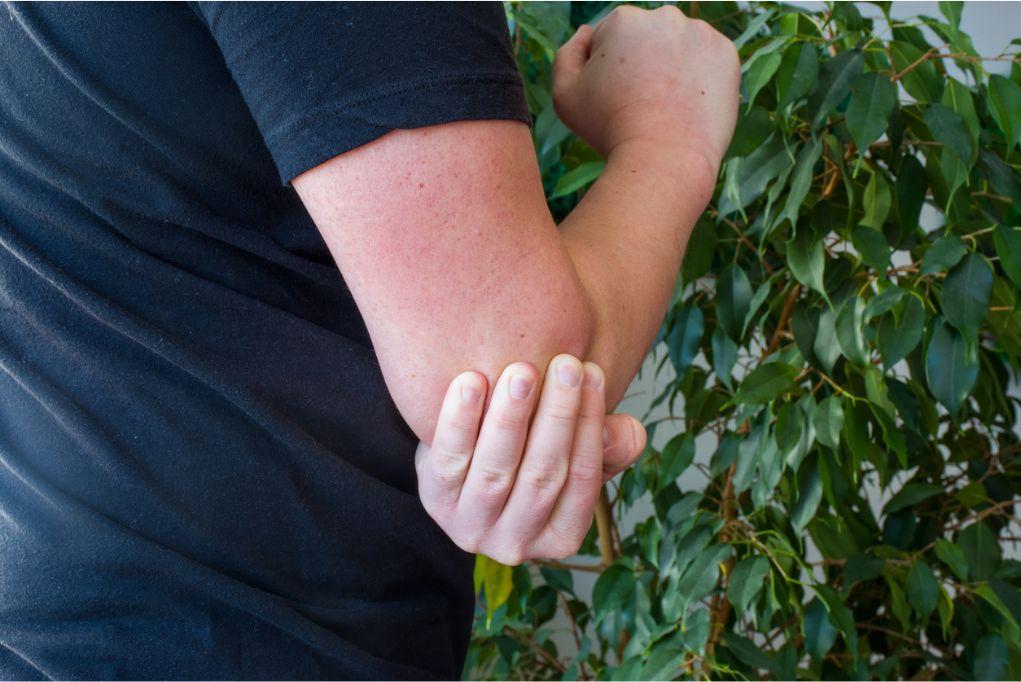
What Is Tricep Tendonitis and Who Gets It?
Tricep tendonitis, sometimes called weightlifter’s elbow, is inflammation or irritation of the triceps tendon, the thick cord of tissue that attaches the triceps muscle to the olecranon, the bony tip at the back of your elbow. When this tendon is overloaded faster than it can adapt and repair itself, small-scale damage accumulates, producing the pain, stiffness, and weakness that define the condition.
Understanding who develops this condition and what drives it helps clarify both why it happens and how to address it effectively.
Who Is Most at Risk
Tricep tendonitis occurs most commonly in weightlifters, throwing athletes, gymnasts, and people whose work involves repetitive pushing or extending against resistance. Bench pressing, overhead pressing, tricep dips, and push-ups are frequent triggers in the gym setting. Outside of sports, manual laborers who push heavy loads or work with tools for extended periods face similar risk. Men are somewhat more commonly affected than women, though the condition can develop in anyone who places a sustained repetitive load on the triceps.
How the Tendon Gets Injured
Tendons are designed to handle load, but they need adequate recovery time to remodel and strengthen after stress. When training volume increases too quickly, rest periods are too short, or technique places excessive strain on the tendon, overuse leads to microscopic damage to tendon fibers that the body cannot repair fast enough to keep up. The result is a tendon that becomes progressively more irritated, less tolerant of load, and eventually painful even during low-intensity activities.
Recognizing the Symptoms of Tricep Tendonitis
The symptoms of tricep tendonitis can develop gradually, which is part of why people often push through them longer than they should. Knowing what to watch for makes it easier to catch the problem early, when treatment is typically simpler and faster.
Common Signs to Watch For
Most people with tricep tendonitis notice a combination of the following:
- Pain or tenderness at the back of the elbow, particularly where the tendon meets the bone
- Soreness that worsens with pushing or pressing movements and eases with rest
- Stiffness at the back of the elbow, especially in the morning or after sitting still
- Weakness when extending the arm against resistance
- Mild swelling around the tip of the elbow in more irritated cases

When the Condition Becomes More Serious
Tricep tendonitis left unaddressed can progress from manageable inflammation to structural tendon damage. When pain appears during everyday movements like pushing yourself up from a chair, reaching overhead, or even straightening the arm, the tendon has typically been under sustained stress for some time. At that point, returning to previous activity levels without appropriate rehabilitation significantly increases the risk of a more serious tendon tear.
How Tricep Tendonitis Is Diagnosed
Because several conditions share similar symptoms around the elbow, including bursitis, arthritis, and partial tendon tears, a precise diagnosis matters. At Motion Orthopaedics, your evaluation is designed to identify not just what hurts, but why.
What Your Evaluation Will Include
Your orthopedic specialist will guide you through a thorough assessment that typically covers the following steps:
- A detailed review of your symptoms, including how long the pain has been present, what activities trigger it, and how it has changed over time.
- A physical examination of the elbow, including palpation of the tendon and testing of strength and range of motion.
- Provocative tests to reproduce your symptoms and identify where the problem originates.
- Imaging studies such as X-ray, ultrasound, or MRI if there is reason to suspect structural damage, a partial tear, or another contributing condition.
Why Getting the Diagnosis Right Matters
Many elbow conditions share similar symptoms, and treating the wrong problem can delay recovery. A confirmed diagnosis of tricep tendonitis, as opposed to, for example, olecranon bursitis or a partial tendon tear, changes the treatment approach entirely. Pinpointing the source is what allows care to be targeted and effective rather than generic.
Treatment Options for Tricep Tendonitis
Most cases of tricep tendonitis resolve with conservative care. The right combination of relative rest, targeted rehabilitation, and gradual load progression provides the tendon with the conditions it needs to heal and rebuild its tolerance to activity.
Conservative Treatments That Work for Most People
The foundation of tricep tendonitis treatment centers on reducing irritation while maintaining as much function as possible. Depending on your diagnosis and severity, your care plan may include several approaches.
Rest and Activity Modification. Complete rest is rarely the answer, but reducing or modifying the activities that aggravate the tendon is an important first step. For lifters, this often means temporarily reducing pressing weights or switching to exercises that place less direct load on the triceps tendon, such as moving from overhead press to lateral raises while the tendon settles down.
Ice and Anti-Inflammatory Medications. Applying ice to the back of the elbow for 15 to 20 minutes after activity helps manage swelling and discomfort during flare-ups. Over-the-counter NSAIDs can reduce pain and inflammation in the short term, though they are not a long-term solution on their own.
Physical Therapy. A structured physical therapy program addresses the root causes of tricep tendonitis rather than just the symptoms. Eccentric strengthening exercises, which involve slowly lowering resistance through the triceps range of motion, have become a cornerstone of tendon rehabilitation because they stimulate tissue remodeling and progressively rebuild load tolerance. Your therapist will also address any deficits in flexibility, movement mechanics issues, or muscle imbalances in the shoulder and upper arm that may have contributed to the injury.
Corticosteroid Injections. For cases with persistent inflammation that have not responded to other conservative measures, a cortisone injection near the affected tendon can provide meaningful pain relief. Injections are generally considered a bridge to allow more effective rehabilitation, not a standalone treatment, and are used selectively, given the potential for tendon weakening with repeated use.
When Surgery Is Considered
Surgery is reserved for cases where conservative treatment over a period of several months has failed to produce adequate relief, or when imaging reveals significant structural damage such as a partial or complete tendon tear that compromises strength. Surgical options may include debridement, removal of damaged tendon tissue, or repair and reattachment of the tendon to the olecranon. Recovery following surgery involves a structured rehabilitation period to progressively rebuild strength and function.
Returning to Activity and Preventing Recurrence
Getting back to full training after tricep tendonitis requires a gradual, progressive return rather than jumping straight back to previous volumes and intensities. Returning too quickly is one of the most common reasons people experience setbacks.
Some practical steps that support a safe return and reduce the risk of recurrence include:
- Warming up the elbow and shoulder thoroughly before any pressing or extension exercises
- Increasing training load gradually, typically no more than 10 percent per week
- Incorporating regular stretching of the triceps and surrounding shoulder musculature
- Strengthening the rotator cuff and scapular stabilizers to distribute load more evenly through the upper limb
- Addressing technique issues in key exercises like bench press and overhead press with a coach or physical therapist
- Taking rest days seriously and monitoring for early signs of tendon irritation before they become a bigger problem
When to See an Orthopedic Specialist
If elbow pain at the back of the arm has been present for more than a few weeks, is getting progressively worse, or has started to limit your ability to train or perform daily tasks, it is time to get a proper evaluation. Early intervention gives the tendon the best opportunity to heal fully without complications, and it keeps your time away from activity as short as possible.
At Motion Orthopaedics, our specialists work with athletes, weightlifters, and active individuals every day. We understand how important it is to return to what you love, and we build treatment plans that reflect your goals, not just your symptoms.
Meet Our Elbow and Upper Extremity Specialists
Luke Choi, MD, is a board-certified orthopedic surgeon specializing in shoulder, knee, and elbow injuries. Click here to learn more about Dr. Choi.
Timothy D. Farley, MD, is a board-certified orthopedic surgeon specializing in knee, shoulder, and elbow injuries. Click here to learn more about Dr. Farley.
Jason A. Browdy, MD, is a board-certified orthopedic surgeon specializing in knee, shoulder, and elbow disorders. Click here to learn more about Dr. Browdy.
Jason P. Young, MD, is a board-certified orthopedic surgeon specializing in shoulder, knee, and elbow disorders. Click here to learn more about Dr. Young.
Nathan Mall, MD, CIME, is a board-certified orthopedic surgeon specializing in knee, shoulder, elbow, wrist, and ankle injuries. Click here to learn more about Dr. Mall.
David J. King, MD, is a board-certified orthopedic surgeon specializing in hip, knee, shoulder, elbow, and ankle injuries. Click here to learn more about Dr. King.
Scott W. Zehnder, MD, is a board-certified orthopedic surgeon fellowship-trained in orthopedic sports medicine. Click here to learn more about Dr. Zehnder.
Tyler R. Krummenacher, MD, is a board-certified orthopedic surgeon specializing in surgery of the hand, wrist, and upper extremity. Click here to learn more about Dr. Krummenacher.
Take the First Step Toward Recovery
Tricep tendonitis does not have to sideline you for months. With the right diagnosis and a structured treatment plan, most people return to full activity and rebuild their strength completely. Whether you are dealing with early-stage soreness or pain that has been building for some time, Motion Orthopaedics is here to help.
Contact us today to schedule an appointment and start your path back to training without limitations.