Fracture vs Break: Is There a Difference?
If you’ve ever injured a bone, you’ve probably heard both terms used: “fracture” and “break.” Maybe your doctor said you fractured your wrist, but your friend insists they broke theirs. Or perhaps you’re wondering if a fracture is less serious than a break, or if they require different treatments.
Here’s the truth: there isn’t a difference. A fracture and a break are the same thing. “Fracture” is simply the medical term that doctors use, while “break” is what most people say in everyday conversation. Whether it’s a tiny crack or a bone that’s completely separated into pieces, it’s called a fracture in medical terms.
The confusion often comes from people assuming “fracture” means something minor while “break” sounds more severe. In reality, both words describe the exact same injury: any disruption in the continuity of a bone.
Different Types of Fractures
While all fractures are breaks, not all fractures look the same. Orthopedic specialists classify them based on the pattern of the break, whether the bone pierces the skin, and how the fragments are positioned.
Simple (Closed) Fracture
The bone breaks but stays beneath the skin. This is the most common type and has a lower risk of infection since the break remains internal.
Compound (Open) Fracture
The broken bone pierces through the skin, or there’s an open wound exposing the bone. These require immediate medical attention due to high infection risk and usually need surgical treatment.
Hairline (Stress) Fracture
A thin crack in the bone, often from repetitive stress rather than a single injury. Common in runners and athletes, these small breaks still need proper rest and healing time.
Comminuted Fracture
The bone breaks into three or more pieces, typically from high-impact trauma like car accidents. These complex breaks often require surgery to realign and stabilize the fragments.
Transverse Fracture
A horizontal break line across the bone, usually from direct impact.
Oblique Fracture
An angled break that runs diagonally across the bone.
Spiral Fracture
A twisting injury creates a break that spirals around the bone. Common in sports where the body rotates while a hand or foot stays planted.
Avulsion Fracture
A tendon or ligament pulls away from the bone with such force that it takes a small piece of bone with it.

Signs You Might Have a Fracture
Watch for these symptoms after a bone injury:
- Intense pain that worsens with movement or pressure
- Rapid swelling at the injury site
- Visible bruising or discoloration
- Deformity or the limb looking bent at an unusual angle
- Inability to move the affected area or bear weight
- Grinding or popping sensation at the time of injury
- Numbness or tingling if nerves are affected
If you suspect a fracture, seek medical attention promptly. Delayed treatment can lead to improper healing and long-term complications.
How Fractures Are Diagnosed
Your orthopedic specialist will examine the injured area, checking for swelling, tenderness, deformity, and range of motion. X-rays are the primary tool for confirming fractures and showing the exact location and pattern of the break. For complex fractures, CT scans provide detailed three-dimensional images, while MRI may be used to evaluate associated soft tissue damage.
Treatment Options
Treatment depends on the type, location, and severity of your fracture.
Immobilization
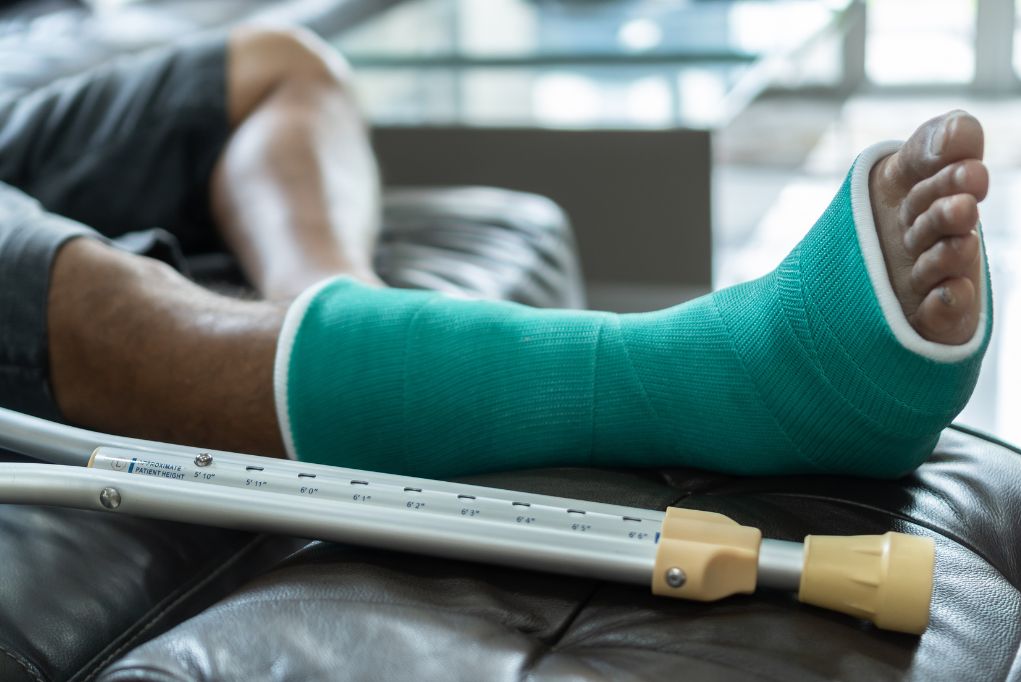
Many fractures heal successfully without surgery. Casts, splints, or braces keep the bone in proper alignment while it heals. Casts work well for stable fractures, while splints allow for initial swelling and are used for less severe breaks.
Reduction
If bone fragments are out of alignment, a doctor may need to manipulate them back into position. Closed reduction is done manually without surgery, while open reduction requires surgical intervention for more complex cases.
Surgery
Some fractures need surgical treatment:
- Internal Fixation: Metal plates, screws, rods, or pins hold bone fragments in place during healing. This is common for complex fractures or breaks in weight-bearing bones.
- External Fixation: A frame outside the body connects to pins inserted into the bone, stabilizing severe fractures while allowing access to soft tissue injuries.
Physical Therapy
Once healing begins, physical therapy helps restore range of motion, rebuild strength, and return you to normal activities safely.
Healing Time
Recovery varies based on several factors. Fingers and toes typically heal in 3 to 5 weeks, while wrist and forearm fractures take 6 to 8 weeks. Upper arm breaks need 8 to 12 weeks, lower leg fractures require 12 to 16 weeks, and thigh bone fractures can take 12 to 20 weeks or longer.
Your age, overall health, nutrition, and whether you smoke all affect healing speed. Children’s bones heal faster than adults’, and conditions like diabetes can slow the process.
Preventing Fractures
While accidents happen, you can reduce your risk:
- Strengthen bones with calcium-rich foods and vitamin D
- Exercise regularly to maintain bone density and balance
- Prevent falls by keeping your home well-lit and free of hazards
- Wear protective gear during sports
- Address osteoporosis if you’re at risk
- Wear proper footwear with good support
- Have your vision checked regularly
When to See a Specialist
Seek medical attention if you experience:
- Severe pain that doesn’t improve
- Visible deformity or bone protruding through skin
- Inability to move the injured area
- Numbness or loss of sensation
- The injured area turns cold or blue
- You heard a snap at the time of injury
- Significant swelling or bruising
- Inability to bear weight on an injured leg or foot
Prompt evaluation ensures proper healing and reduces complications like bones healing in the wrong position or failing to heal at all.
Expert Fracture Care at Motion Orthopaedics
Whether you call it a fracture or a break, what matters most is getting expert care. At Motion Orthopaedics, our experienced orthopedic surgeons specialize in diagnosing and treating all types of bone fractures, from simple breaks to complex injuries requiring surgical intervention.
We provide prompt evaluation, accurate diagnosis, and personalized treatment plans designed to get you back to your normal activities as quickly and safely as possible.
Meet Our Fracture Care Specialists:
Hand, Wrist, and Finger Fractures
Foot, Ankle, and Shin Fractures
Knee, Shoulder, and Elbow Fractures
- David J. King, MD
- Timothy D. Farley, MD
- Scott W. Zehnder, MD
- Jason A. Browdy, MD
- Jason P. Young, MD
- Luke Choi, MD
- Nathan Mall, MD, CIME
Spine Fractures
Get Expert Fracture Treatment in Missouri
If you’ve suffered a bone injury, Motion Orthopaedics is here to help. Our orthopedic specialists provide comprehensive fracture care using the latest diagnostic technology and evidence-based treatment approaches.
With convenient locations across Missouri, including Creve Coeur, Wentzville, Rolla, Cape Girardeau, and Jefferson City, expert fracture care is always within reach. From emergency fracture treatment to long-term follow-up and rehabilitation, we’re with you every step of your healing journey.
Don’t wait if you suspect a fracture. Early treatment leads to better outcomes and faster recovery.
Contact Motion Orthopaedics today to schedule an appointment and get the expert care you need.